Online Reputation Management
Search Engine Reputation Management (SERM)
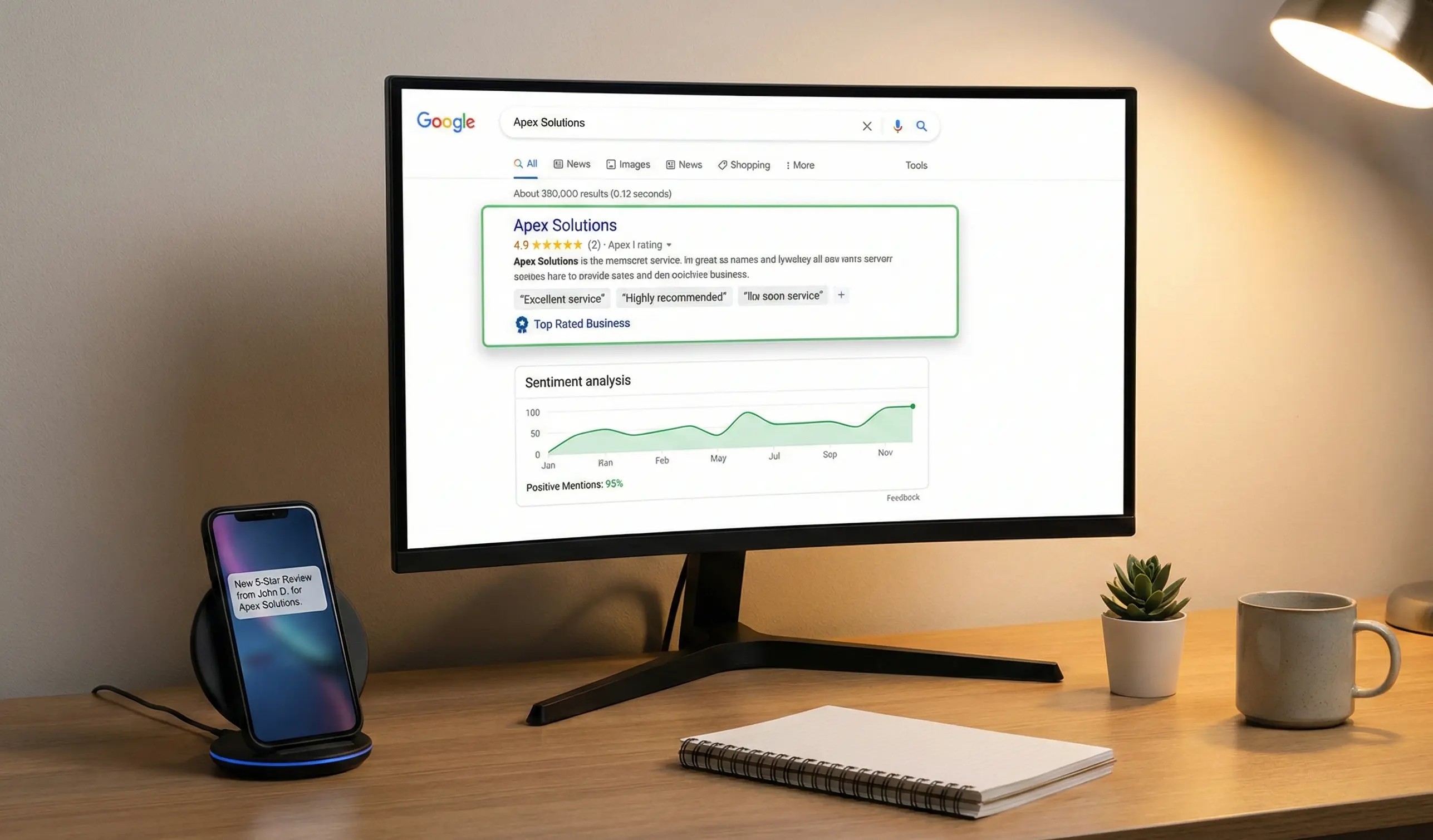
Search Engine Reputation Management (SERM) is the process of improving how a brand, product, or business appears in search engine results. It focuses on influencing what people see when they search for your company on platforms like Google by promoting positive content, managing reviews, and reducing the visibility of harmful or misleading results. A strong search reputation increases brand credibility, builds customer trust, and ensures that potential customers encounter accurate and favorable information when researching your business online.
Online Reputation Management or SERM?
Search engine reputation management falls under the umbrella of Online Reputation Management (ORM). SERM is the subset of ORM that focuses specifically on the search results for specific:
Brands
Products
Services
ORM is a higher-level practice that includes search engines and all the other facets of a company’s online reputation. Businesses often use professional software or hire ORM teams as part of their digital marketing strategy.
Why Search Engine Reputation Is Critical for Businesses
Search engine reputation plays a direct role in how people perceive a brand online. When potential customers search for a company name, the information that appears on the first page often shapes their first impression and influences their level of trust.
A strong search reputation encourages users to engage with a brand confidently. Positive reviews, credible mentions, and authoritative content build trust and support higher conversion potential. In contrast, negative articles, poor ratings, or unfavorable discussions can quickly push potential customers toward competitors.
Maintaining a positive presence in search results also provides a competitive advantage. Businesses that actively manage their search reputation ensure that accurate information, strong reviews, and trustworthy content appear prominently when users search for their brand.
How Search Engine Reputation Management Works
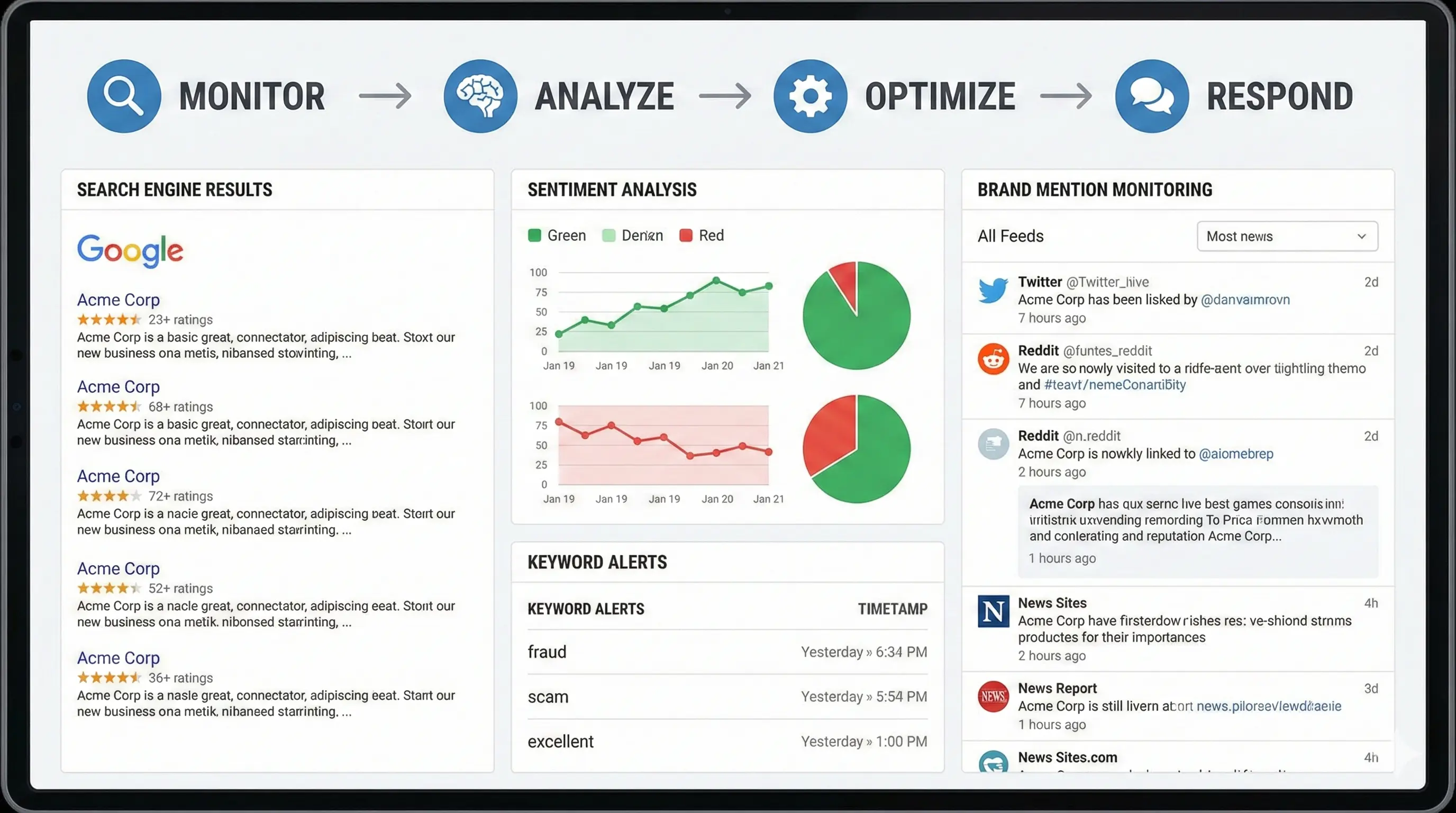
Search engine reputation management involves discovering opportunities for businesses and websites to improve their reputations on search engines. Search engine reputation is both a subjective and objective concept, including:
Subjective analyses of how a business and its products are covered.
Objective analyses of the positivity or negativity of online reviews.
Online reputation strongly influences how customers evaluate a business. About 93% of consumers read online reviews before making a purchase, and many trust them as much as personal recommendations. When people search for a brand, the first page of results shapes their perception. Negative reviews or critical content in those results can quickly push potential customers toward competitors.
Basically, you need to assume that potential customers are researching your brand online. Have a quick look at what comes up when you make searches including your brand name. If a lot of negativity follows clicking “Search”, you can be certain it’s costing you customers.
This is where search engine reputation management comes in. What if there were a way to ensure more positive results come up when your brand name is searched for online?
Direct Removal or Altering of SERPs
Some SERM strategies involve using SEO strategies to directly add or remove search engine results.
For example, you can manually cleanse a negative autocomplete suggestion by Google by reporting a prediction to them. In some cases, you can also ask Google to remove something from their SERPs if it violates their policies.
These methods focus on removing online content that negatively impacts your reputation. Of course, this is not the ideal option. You should take these actions if there is content about your business that:
Is offensive or unethical
Constitutes defamation
Violates the privacy of employees, clients, partners, investors, or customers
Creating & Boosting Positive Content
The more feasible and positive way to manage your business search engine reputation is creating positive content that appears high in the SERPs for relevant searches. Search engines, especially Google, reward businesses that create content that is:
Relevant
Useful
Original
Created by people with EEATs:
Experience
Expertise
Authority
Trust
There are several ways to create positive content that shows up early in relevant SERPs for your business. However, some methods are more impactful than others. Also, some overly manipulative methods are actually penalized, particularly by Google.
You can publish content under your business name and website with SEO practices to improve your search engine reputation. Some great ways to improve your search results include:
Publish authoritative content targeting branded search keywords.
Build profiles on trusted platforms to control branded search results.
Share expert content that strengthens brand credibility.
Promote positive mentions through PR and reputable publications.
Guides, how-tos, and other educational content.
Relevant and accurate information about your business.
Authoritative opinion pieces or other news articles.
By creating content like this and ensuring it ranks high for relevant keywords, you can foster a better search engine reputation.
User-Generated Content
At the top of the list, Google looks at positive user-generated content especially favorably. Google defines user-generated content as any content that users contribute that isn’t a paid ad. For example, user-generated content can include:
Text or video reviews
Images
Videos involving your products
Profiles
Usernames
Online reviews
Votes
Having user-generated content on your site or mentions of your site from users on other platforms can support a very healthy search engine reputation.
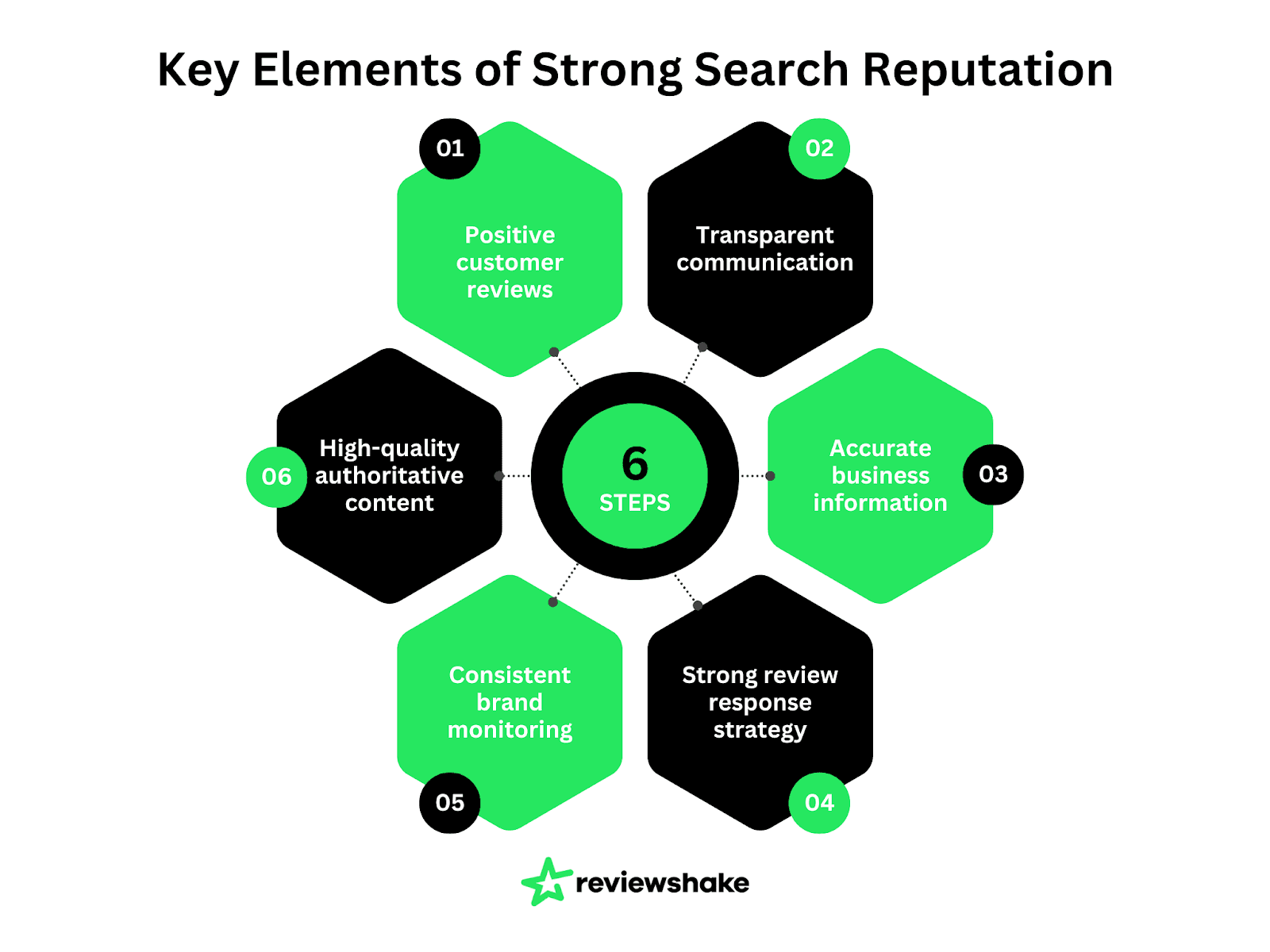
Search Engine Reputation Management Practices
To reap the best benefits from the three aspects of SERM we just discussed, you need a thorough approach. A SERM plan has a few steps that you can’t afford to miss.
Analysis
Search engines are very difficult battlegrounds where real estate doesn’t come (or stay) easy. A strong reputation must be coupled with analysis to get the top spaces in the search results.
In SERM, the first subject of analysis is SWOT:
Strengths
Weaknesses
Opportunities
Threats
The first two have simple meanings; you need to know where you stand. Specifically, you need to know what aspects of your search engine presence are helping or hindering your business. Analysis tools include reputation management, SEO marketing, and CRM tools.
Normally, SERM analysis is conducted under the umbrella of online marketing research. It’s just a specific area finding out what terms your business or mentions of it rank for, and how positive or negative those listings and mentions are.
Strategy
Next, there’s the strategy phase, which is the part where you make a plan for improving your reputation on search engines.
Cleaning and displacement
A SERM strategy includes a list of the data you need and a list of actions for displacing negativity or promoting positivity. So, let’s start with a list of the potential SERM negatives:
Bad reviews
Poor press coverage or hit pieces
Negative video reviews or blog entries
Unfavorable forum discussions
Each of the above should be listed so you can respond effectively to each instance. For example, negative reviews about one of your products could be remedied by positive reviews, articles, blogs, or marketing campaigns for that product. This approach would be called cleaning and displacement.
You can clean and then displace negative content about your brand on the search engines. Clearing and displacing is a deliberate and careful approach that will require your business to:
Accurately target negative space on search engines
Create positive native content that detracts from the negative content for the same keywords
Interactive online activities such as forums and discussions
Respond professionally to criticism by addressing concerns transparently and resolving legitimate customer issues constructively.
Active action against blatant disinformation
Playing up positives
Your analysis should also have provided your current strengths. You should know what search engine spaces are currently serving you well. You can leverage positive coverage of your brand or products with further marketing content or ads. When your SERM is going well with certain products or areas of your business, it’s sensible to drive the benefits home with:
Better SEO efforts to make the positivity more visible
Ads targeted at potential buyers of your most positive products
Content that highlights your positive reviews and other testimonials
Collaboration with other publications or influencers
Organic social media content
Paid social media campaigns
A strong review response system
The grey zone: arising opportunities and threats
The opportunities and threats your analysis discovers are especially important. If your product or service offers any unique benefits whatsoever, it’s important to highlight them. But more crucially, for the SERM strategy, users should leave great reviews highlighting them!
Best Tools for Search Engine Reputation Management
Monitoring brand mentions and online feedback is essential for maintaining a strong search reputation. Several tools help businesses track conversations, reviews, and mentions across the internet.
Google Alerts – Sends notifications when your brand name or keywords appear in new online content.
Brand24 – Tracks brand mentions across websites, forums, blogs, and social media platforms.
SEMrush Brand Monitoring – Identifies brand mentions and helps analyze sentiment across the web.
Mention – Monitors online conversations and alerts businesses when their brand is discussed.
ReviewTrackers – Helps manage and analyze customer reviews across multiple review platforms.
Reputation.com – Provides reputation monitoring, review management, and customer sentiment insights.
FAQs on Search Engine Reputation Management
1. What is brand reputation management?
Brand reputation management is the process of monitoring, influencing, and improving how a company is perceived online. It involves managing reviews, promoting positive content, responding to feedback, and ensuring accurate information appears in search results to maintain trust and credibility.
2. What is reputation management SEO?
Reputation management SEO focuses on optimizing search results for branded keywords. It involves publishing positive content, improving website authority, and promoting credible mentions so that favorable pages rank higher while negative or misleading results become less visible.
3. What are negative search results?
Negative search results refer to unfavorable content that appears when users search for a brand or product online. This may include poor reviews, critical news articles, complaints on forums, or misleading information that can harm a company's reputation and influence customer decisions.
4. What is online review management?
Online review management involves monitoring, responding to, and improving customer reviews across platforms such as Google and review websites. Businesses address feedback professionally, resolve issues, and encourage satisfied customers to leave honest reviews to maintain a strong reputation.
5. What are brand monitoring tools?
Brand monitoring tools track online mentions of a company across search engines, websites, forums, and social media. These tools notify businesses when their brand is discussed online, allowing them to respond quickly to feedback and manage their reputation effectively.
6. How to remove negative search results?
Negative search results can sometimes be removed by requesting deletion if the content violates platform policies. In many cases, businesses focus on publishing positive and authoritative content that ranks higher in search results, gradually reducing the visibility of negative pages.
7. How to improve Google reputation?
Improving Google reputation involves encouraging positive reviews, responding professionally to feedback, publishing trustworthy content, and maintaining accurate business information online. Consistent monitoring and proactive engagement help ensure that favorable results appear when users search for the brand.
8. What are reputation management strategies? Reputation management strategies include monitoring brand mentions, responding to customer feedback, promoting positive content, managing reviews, and addressing misinformation. These actions help maintain credibility, strengthen trust, and ensure that search results reflect accurate brand information.