How to Spot Fake Google Reviews Before They Hurt Your Reputation
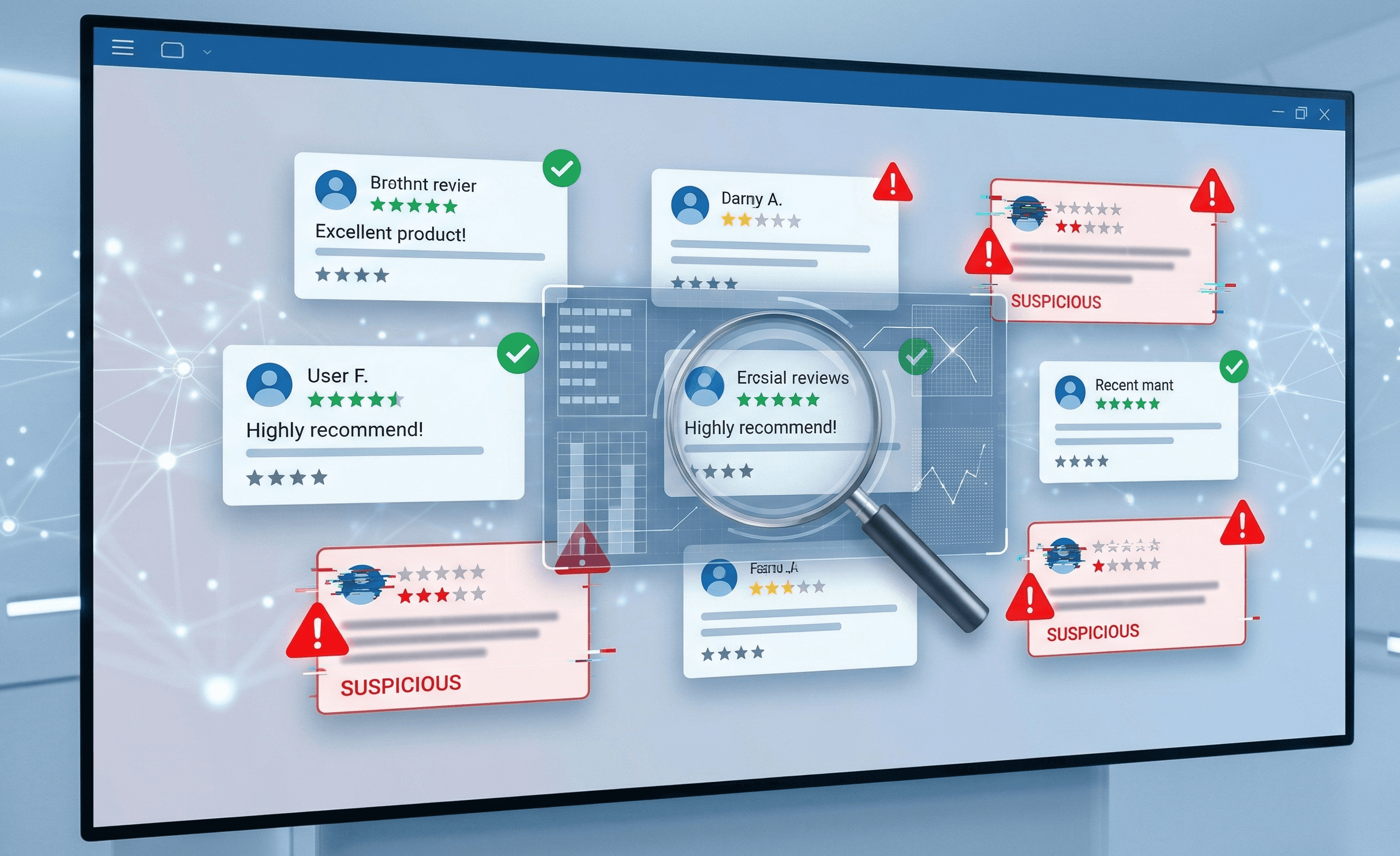
Your star rating is often the first thing a potential customer sees. A sudden drop or a flood of suspicious one-star reviews can send buyers straight to a competitor. Fake reviews are not just annoying. They are a direct threat to your business, and they are happening more than ever.
Google blocked 240 million fake or policy-violating reviews in 2024 alone. Many more still got through. The sooner you learn to spot fake Google reviews, the faster you can act and the less damage they will do.
Why Fake Google Reviews Are a Serious Business Risk
A single fake negative review can cost you real customers. Studies consistently show that most people read reviews before buying, and most will not choose a business rated below four stars. Fake reviews drag that rating down fast.
There is also an SEO angle here. Google uses review signals to rank local businesses. A spike in low ratings even fake ones can push your listing down in local search results and knock you out of the local pack on Google Maps. That means less visibility, fewer clicks, and less revenue.
The emotional reaction most business owners have is to fire back publicly or demand instant removal. That instinct is understandable, but it often makes things worse. The smarter move is early detection and a strategic response. Catching fake reviews fast before they accumulate and shift your average rating gives you the best shot at protecting your reputation.
What Counts as a Fake Google Review?
Not every bad review is fake, and not every fake review is negative. A fake Google review is any review that does not reflect a genuine, firsthand experience with your business. That covers reviews from people who were never your customers, reviews written by competitors trying to sabotage you, bot-generated spam, paid reviews from review farms, and increasingly, AI-generated content that sounds polished but has zero connection to reality.
Why Businesses Get Targeted with Fake Reviews
Competitor sabotage is the most common reason. A rival business pays for negative reviews to lower your rating and improve their own standing in search results. Extortion is another real threat someone threatens to flood your profile with bad reviews unless you pay them. Review bombing can happen after a viral social media incident, even when the original complaint was exaggerated or completely made up. Some businesses get hit by mistaken identity, where reviewers confuse them with a different company. Disgruntled non-customers people who never bought from you but had some kind of grievance round out the picture.
Step 1: Check the Reviewer's Profile Carefully
Click the reviewer's name or avatar on Google Maps or Search. A legitimate customer usually has a real profile photo, a handful of reviews spread across different local businesses, and a consistent location history. Red flags to look for:
No profile photo or a generic username
Only one review ever posted
Reviews of businesses in wildly different cities within the same day or week
A Local Guide badge, fake review farms actively build Local Guide status to appear credible
Real people do not visit a dentist in Dallas, a hotel in Miami, and a mechanic in Chicago all in 48 hours. That pattern alone is a strong giveaway.
Step 2: Look for Suspicious Language Patterns
Fake reviews often read in very specific ways. Negative fakes tend to be vague and emotionally charged think 'horrible service!!!' with no detail about what actually went wrong. Positive fakes go the other direction with over-the-top praise and zero specifics. Neither type mentions staff names, items ordered, or anything that proves the reviewer was actually there.
AI-generated reviews are getting harder to spot, but they tend to have unnaturally smooth grammar, a generic storytelling structure, and a weirdly formal tone that does not match how real customers write. When you see multiple reviews posted within minutes of each other that all follow the same structure, that is almost always a bot or paid farm at work. Keyword-stuffed reviews that read more like marketing copy than customer feedback are another clear warning sign.
Step 3: Verify Against Your Internal Records
This step is non-negotiable. Cross-check the reviewer's name against your booking system, CRM, email history, and point-of-sale data. If there is no record of this person ever contacting you, purchasing from you, or walking through your door, that is a meaningful red flag. Check with your team too staff on the floor often remember difficult interactions, and if nobody recognises the situation described, the review is very likely fake.
Step 4: Identify AI-Generated or Bot Reviews
AI-generated reviews tend to follow a suspiciously clean narrative arc problem introduced, experience described, conclusion reached with no genuine emotional roughness. Real customer reviews are messier. They trail off, skip details, and use casual language. Bot reviews often appear in tight clusters, sometimes dozens posted within the same hour. If you spot a wave of new reviews hitting your profile overnight with similar sentence structures, treat that as a coordinated attack until proven otherwise.
Step 5: Check Timing and Review Patterns
Multiple negative reviews appearing within a 24 to 48-hour window is one of the clearest signs of a coordinated attack. Pull up your rating history and look for sudden drops that do not match any real service issues internally. Then check whether the accounts leaving bad reviews about you are simultaneously leaving five-star reviews for your direct competitors. That pattern is textbook competitor sabotage and can form the basis of a strong report to Google.
Step 6: How to Report Fake Google Reviews
Flagging a fake review is straightforward. On Google Maps or Google Search, find the review, click the three-dot menu next to it, and select Report review. Inside Google Business Profile, go to the Reviews tab, find the review, click the flag icon, and select the most accurate reason typically Not a real customer or Conflict of interest.
Include as much evidence as possible. Screenshots of the reviewer's profile history, records showing the person was never a customer, and any patterns linking the account to a competitor all strengthen your case. Google typically takes between three and seven days to respond, though complex cases can take longer.
What to Do While Waiting for Google's Decision
Post a calm, professional response to the fake review while the report is under review. Do not accuse the reviewer directly keep it short and transparent, acknowledging you have no record of the experience described and inviting them to get in touch. This response is not really for the fake reviewer. It is for every real customer who reads it next. A composed, factual reply signals credibility and shows that your business takes feedback seriously regardless of its source.
When Google Does Not Remove the Review
Removal requests get denied more often than business owners expect, usually because the review does not clearly violate a specific Google policy. Respond strategically rather than reactively. The most effective long-term defence is a strong volume of genuine positive reviews. A business with 300 real reviews at 4.7 stars is far less vulnerable to one fake review than a business with 20 reviews at 4.2 stars. Proactively asking happy customers to leave reviews is always the most powerful counter to fake ones.
How to Prevent Fake Reviews in the Future
Set up review alerts so you know the moment a new review lands on your profile. Daily or weekly monitoring catches suspicious activity before it has time to build up and shift your average rating. Track patterns over time a single odd review might be nothing, but three in a week from brand-new accounts is worth investigating immediately. Businesses with multiple locations face a much bigger challenge here, since manually checking every profile becomes unmanageable fast. Centralising review monitoring across all locations in one dashboard is the only way to stay on top of it at scale.
Common Mistakes Businesses Make
Responding aggressively to a suspected fake review is one of the worst things you can do. It looks bad to future readers, and it can escalate the situation. Other common mistakes include:
Publicly accusing the reviewer of lying creates legal risk and looks defensive
Ignoring the review entirely hands the fake reviewer a free win
Sharing private customer data in a public response violates privacy rules
Buying fake positive reviews to counteract fake negatives puts you at risk of FTC fines up to $51,744 per incident
Detect Early, Respond Strategically, Protect Your Reputation
The playbook is straightforward. Spot fake reviews online as soon as they land. Verify the reviewer against your records. Report with clear evidence. Respond professionally in public. Then keep generating a steady stream of real reviews to make your rating resilient against attack.
Doing all of that manually across multiple locations is a full-time job. Reviewshake lets you monitor new reviews in real time, get instant alerts when suspicious activity appears, and manage your entire review presence from one centralised dashboard so you stop fake Google reviews from doing lasting damage before it is too late.
Frequently Asked Questions
Can fake Google reviews be removed?
Yes, but only Google can remove them. You flag the review, provide evidence, and Google decides whether it violates their policies. Removal is not guaranteed, which is why responding professionally and generating real reviews is equally important.
How do I report fake reviews on Google?
Open the review on Google Maps or Google Search, click the three-dot menu, and select Report review. You can also report directly inside your Google Business Profile under the Reviews tab. Include screenshots and any internal records showing the reviewer was never a customer.
Can competitors leave fake reviews on my Google listing?
Yes, and it happens regularly. Reviews written by or on behalf of a competing business violate Google's conflict of interest policy. If you can identify a link between the reviewer's account and a competitor, include that evidence in your report to strengthen the case.
What is review bombing?
Review bombing is a coordinated attack where multiple fake negative reviews are posted in a short period, sometimes within hours. Each review needs to be reported individually. Alerting Google Support about the overall pattern, rather than just individual reviews, gives you a much stronger case.
Are fake Google reviews illegal?
In the US, yes. The FTC's 2024 Final Rule on Consumer Reviews makes it illegal to create, buy, or manipulate reviews. Fines can reach up to $51,744 per incident. Businesses that use fake review services face serious legal and financial consequences.
How long does Google take to remove a fake review?
Typically three to seven days, though some cases take longer. Follow up with Google Support if there is no update after a week and keep documenting your evidence throughout the process.
Does responding to a fake review actually help?
Yes. A calm, professional response shows future readers that you take feedback seriously and operate transparently. It also signals to Google's review team that the review is disputed, which can support your removal request.