Online Reputation Management
How to conduct an online reputation audit
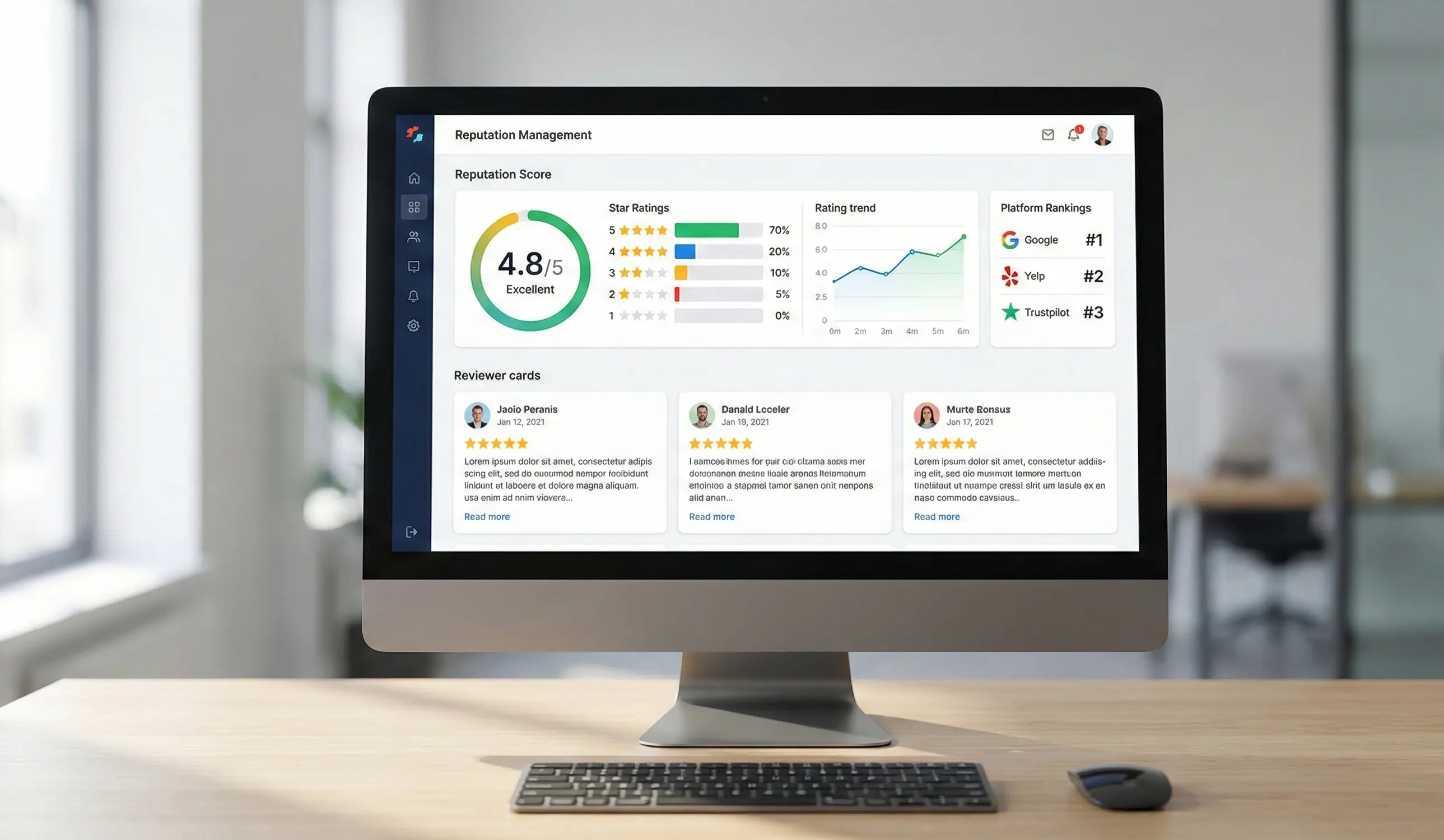
An online reputation audit helps you understand how your brand appears across search results, review sites, directories, and social media. It shows what potential customers see first, highlights gaps or negative signals that could hurt trust, and gives you a clearer starting point for improving your online reputation.
In this guide, we’ll focus specifically on how to conduct an effective online reputation audit and identify key areas that impact how your brand is perceived. More specifically, we can show you how and why to conduct an online reputation audit that will help you understand your current situation and identify areas where improvement is possible.
The purpose of an online reputation audit is to discover how your brand is perceived online. The audit is an opportunity to put yourself in a potential buyer’s shoes and see your business from an unbiased perspective: What impression does your brand give off? What information is available online? Does this information paint an accurate picture?
Think of it as a snapshot of your current status – a good starting point that will help you map out the next steps and make informed decisions about a comprehensive online reputation strategy.
Whether you want to perform an audit for your business or you want to add audits to the service you offer clients, here are the fundamentals.
Quick Online Reputation Audit Checklist
Before diving into the detailed steps, use this quick checklist to get an overview of your current online reputation:
Website performance and user experience (loading speed, mobile responsiveness, clarity of content)
Google search results for your brand (first-page visibility, negative content, outdated information)
Online reviews and ratings (average rating, volume of reviews, recent feedback trends)
Social media mentions and engagement (comments, shares, customer sentiment)
Brand mentions across the web (blogs, news articles, forums, and third-party sites)
Local listings accuracy (consistent business name, address, phone number across directories)
Analyze your website
Start with the assets you fully control, your website. It’s often the first impression potential customers have of your brand, so it needs to reflect credibility, clarity, and performance.
Begin by evaluating your website performance. A slow-loading site can negatively impact both user experience and search rankings. Use tools like Google PageSpeed Insights to identify issues and improve load times.
Next, review your mobile responsiveness. A large portion of users will access your site on mobile devices, so your website should be fully optimized for different screen sizes, with easy navigation and fast loading speeds across devices.
Check your SEO fundamentals to ensure your site is easily discoverable:
Proper use of meta titles and descriptions
Correct indexing of key pages
Clean URL structure and internal linking
Relevant, keyword-optimized content
Analyze user experience (UX) and engagement metrics such as bounce rate, time on page, and navigation flow. If visitors leave quickly or struggle to find information, it can signal deeper issues with content clarity or usability.
Finally, assess your trust signals. Elements like customer testimonials, case studies, reviews, certifications, and security badges (e.g., SSL) help build credibility and reassure visitors that your business is reliable.
A well-optimized website not only improves your online reputation but also strengthens your visibility and conversion potential.
Online review metrics
The next step in your online reputation audit is to analyze your presence across key review platforms where customers actively share feedback about your business.
Start by identifying and reviewing profiles on major platforms such as Google Reviews, Trustpilot, Yelp, and industry-specific sites like G2 (for SaaS and B2B companies). These platforms often shape first impressions and directly influence buying decisions.
Begin with the basics:
Average rating across platforms
Total number of reviews
Consistency of ratings across different sites
Next, go deeper into performance metrics:
Review trends over time: Look for patterns, are ratings improving, declining, or fluctuating during specific periods? This can help identify operational or service-related issues.
Sentiment analysis (positive vs. negative): Go beyond star ratings and analyze the actual feedback. What are customers consistently praising or complaining about? Identifying recurring themes helps prioritize improvements.
Response rate and responsiveness: Evaluate how often and how quickly your business responds to reviews, especially negative ones. Active engagement shows that you value customer feedback and can positively influence brand perception.
Pay special attention to negative reviews, as they often highlight gaps in customer experience. Addressing these issues and responding professionally can significantly improve trust and credibility.
To streamline this process, tools like Reviewshake can help aggregate reviews from multiple platforms, track trends, and provide actionable insights.
A thorough analysis of your online reviews not only reveals how customers perceive your business but also uncovers opportunities to improve ratings, enhance customer satisfaction, and strengthen your overall online reputation.
Perform a wide Google search
A Google search is one of the most important parts of an online reputation audit because it shows exactly what potential customers are likely to see first when they look up your business.
Start by searching your brand name in exact match format and reviewing the results carefully. Look beyond the top few links and analyze at least the first two pages of Google search results to get a broader picture of your online presence.
As you review the results, pay attention to:
Branded search results: Are your website, social profiles, and key business listings appearing prominently?
News mentions: Have any media outlets or blogs featured your company, positively or negatively?
Images and videos: Check whether visual content associated with your brand supports a strong and accurate impression.
Incorrect or outdated information: Look for old business details, inaccurate descriptions, or duplicate listings that could confuse potential customers.
Negative press or unfavorable content: Identify articles, posts, or mentions that could harm trust or influence buying decisions.
You should also review local listings and directory websites to make sure your business information is accurate and consistent across platforms. Fix outdated or incorrect details as soon as possible.
To make this process easier over time, set up Google Alerts for your company name, product names, and key brand terms. This helps you monitor new mentions and respond quickly to anything that could affect your online reputation.
A thorough Google search audit helps you understand how visible, accurate, and trustworthy your brand appears in search results, and where immediate improvements are needed.
Social media sentiment analysis
Social media platforms play a critical role in shaping your online reputation. Channels like Facebook, LinkedIn, X (Twitter), and Instagram are often where customers share opinions, experiences, and feedback in real time.
Start by identifying where your brand is being mentioned and how frequently. Then go beyond mentions and analyze engagement metrics such as likes, shares, comments, and overall interaction levels. High engagement can amplify both positive and negative perceptions of your brand.
Next, evaluate the sentiment ratio of your social conversations:
How much of the discussion is positive, neutral, or negative?
Are there sudden spikes in negative sentiment that need attention?
Dig deeper into the content of these conversations to identify common themes:
What are customers consistently praising?
What complaints or issues appear repeatedly?
Recognizing these patterns helps you understand customer expectations and pinpoint areas that require immediate improvement.
To simplify this process, you can use tools like Hootsuite, Sprout Social, or Brand24 to track mentions, measure engagement, and analyze sentiment at scale.
Don’t overlook employee advocacy and leadership presence online. If team members or company leaders actively post on LinkedIn or contribute to industry discussions, their content can influence brand perception. Make sure this aligns with your overall messaging and reputation strategy.
A strong social media analysis helps you stay ahead of emerging issues, reinforce positive sentiment, and maintain a consistent and trustworthy brand presence online.
What to do with the results
When the results are in, it’s time to take action. Check for low-hanging fruit and urgent issues like negative reviews. Tend to those first. When that’s out of the way, you can use the audit as the foundation for a comprehensive online reputation management strategy.
To get started, check outthis guide to defining a strategic approach to online reputation.
FAQs About Online Reputation Audits
Q1. What is an online reputation audit?
An online reputation audit is the process of evaluating how your brand is perceived across search engines, review platforms, social media, and third-party websites. It helps identify negative feedback, outdated information, and opportunities to improve your brand’s credibility and visibility online.
Q2. How often should you conduct an online reputation audit?
It’s recommended to conduct an online reputation audit at least once every quarter. However, businesses with high customer interaction or active online presence should monitor their reputation continuously and perform a detailed audit monthly.
Q3. What tools can help with an online reputation audit?
Tools like Google Alerts, Reviewshake, Hootsuite, Sprout Social, and Brand24 can help monitor brand mentions, track reviews, analyze sentiment, and identify reputation trends across different platforms.
Q4. How can you fix a negative online reputation?
To fix a negative online reputation, start by responding to negative reviews professionally, addressing customer concerns, and correcting inaccurate information. Then focus on generating positive reviews, improving your content and customer experience, and building strong brand mentions through PR and engagement.